4/11/2026
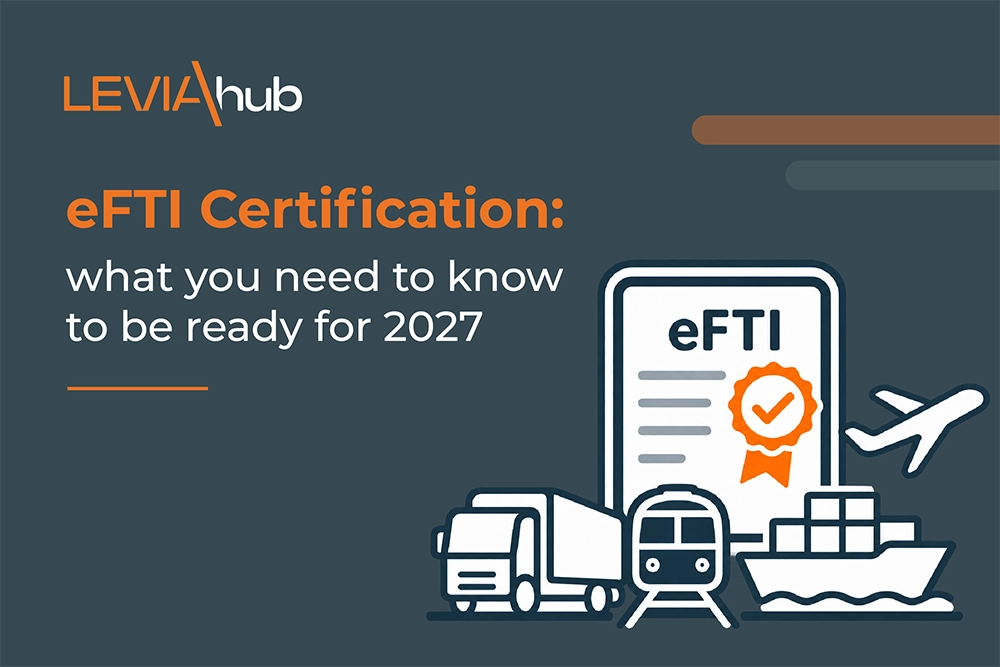
The European Commission has drafted the rules for certifying eFTI platforms. For economic operators such as shippers, carriers and forwarders, the certificate determines whether authorities must accept their digital freight data, and for which types of cargo. Before choosing a platform, it is important to check its certification profiles.
Going paperless with transport documents is no longer a pilot topic. Under the EU's eFTI Regulation, authorities in every Member State will have to accept regulatory freight information shared electronically, but only through certified platforms.
The draft certification rules are written mainly for platform providers and the bodies that will assess them, namely Conformity Assessment Bodies (CABs). The draft text mainly covers evidence, test methods and procedures, but it also has implications for operators. It defines what being certified means, how certification can be checked and what changes for the people who create, sign and present transport documents every day.
This article explains these points in simple terms. It is based on the draft Commission Delegated Regulation and its annexes, which may still change before final approval.
eFTI certification is an EU-wide check confirming that a platform meets the functional and data requirements established by the eFTI rules. Independent, accredited assessment bodies carry out the checks, not the authorities.
The draft establishes one common framework for all Member States:
The requirements come from two acts already in force: the functional requirements in Implementing Regulation (EU) 2025/2243 and the common data set in Delegated Regulation (EU) 2024/2024.
Because it determines whether authorities must accept digital freight data. Under Regulation (EU) 2020/1056, competent authorities must accept regulatory information made available through a certified eFTI platform. When information is shared through an uncertified platform, there is no such obligation.
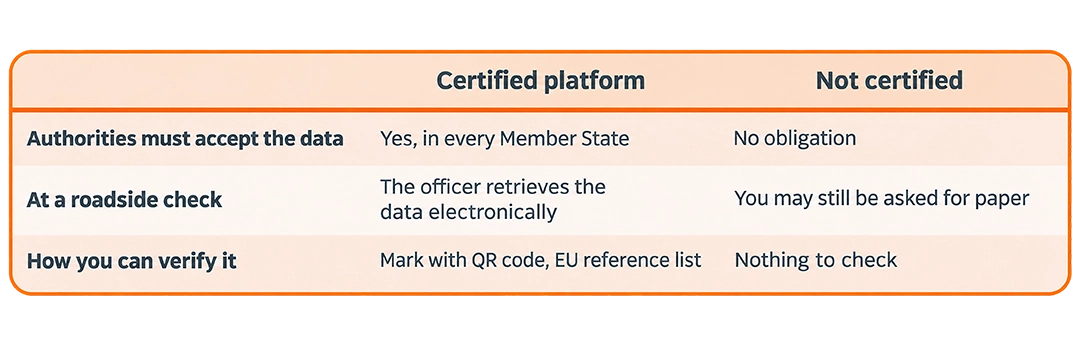
Using eFTI remains a choice for operators: paper documents are still allowed. But if operators choose digital documents, certification is what makes them count across borders.
It depends on what you carry and how you transport it. The draft defines six certification profiles: four basic profiles, one for each transport mode, and two add-ons for dangerous goods and waste, which can only be combined with a basic transport profile.
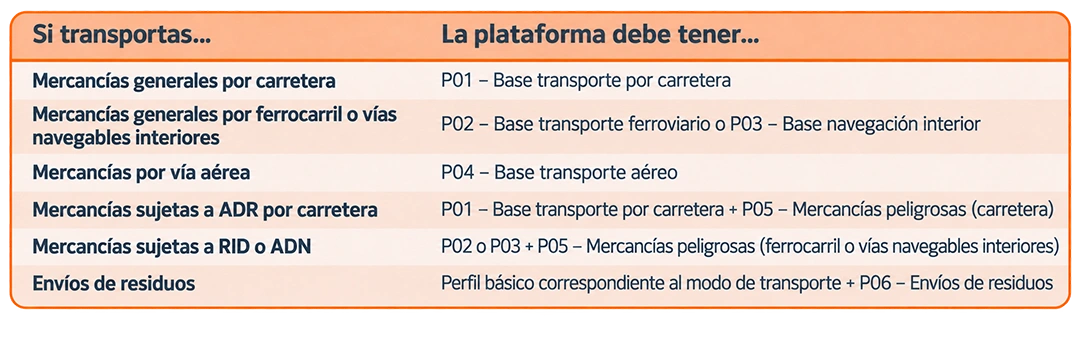
The two add-ons are very different. The dangerous goods profile is mainly about handling ADR, RID or ADN data correctly. The waste shipments profile requires full integration with DIWASS, the EU system for waste shipment documents: retrieving documents, submitting carrier transfer confirmations and receiving the consignee's signature.
For this reason, a general statement that a platform is eFTI certified is not enough. It is important to ask which profiles are certified and for which transport modes.
A certified eFTI platform must behave in specific ways, and some of these requirements change daily routines. Here are the five main changes:
Every certified eFTI platform will receive a certification mark with a QR code linking to its entry in the EU reference list. The list will show whether the certificate is valid, suspended or withdrawn.
Under the draft, the mark includes the EU emblem, the label "eFTI certified", the certificate identifier and the QR code. It must appear on the platform itself, in its user documentation and on every readable copy of a downloaded document. A sealed, machine-readable version will also accompany the data sent to authorities.
Two features of the draft are worth noting:
Three questions cover most of the risks. It is important to ask them before committing to a platform for the years ahead.
Make sure they match your transport modes and cargo, including dangerous goods or waste if you carry them.
You should be able to scan the certification mark or look up the platform in the EU reference list at any time.
The draft does not yet specify the consequences for operators, so ask the provider how it plans to handle this situation.
The rules are still a draft. Feedback is open on the European Commission's Have Your Say page until 18 November 2026, and the text may change before adoption. If you use or plan to use digital freight documents, now is the time to make your voice heard.
For operators, the practical step is simple: include eFTI certification in your checklist when choosing or reviewing a digital document platform. Know which profiles you need, ask how to verify them and discuss the provider's timeline.
Which certification profile matters most in your operations? Let us know, and we will cover it in more depth.
beOne Geocoding turns addresses into accurate geographic data for logistics, helping companies optimize routes, deliveries, operational planning, and geographic analysis with Google Maps Platform.
Leviahub offices will be closed from August 5 to August 26. Urgent support requests will remain available through the Web Ticket system during the summer break.
IRU launches a new interoperable framework for e-CMR, paving the way for more efficient, secure and connected digital freight transport across Europe.
Route planning has become a strategic driver for improving logistics performance, reducing transport costs, increasing delivery efficiency and supporting a more sustainable supply chain.
At SIL Barcelona 2026, Leviahub presents its growing international ecosystem and innovative technologies designed to accelerate digital transformation across logistics, transport and supply chain operations.
Leviahub Spa
Headquarters: Foro Buonaparte, 71 - 20121 Milano (MI)
Tel. +39 02 611133 | info@leviahub.com
Share capital Euro 5.057.400,00i.v.
P.I. e C.F. 01233220324 | REA MI-2503338
SDI: 1YY4LRX