30/7/2026
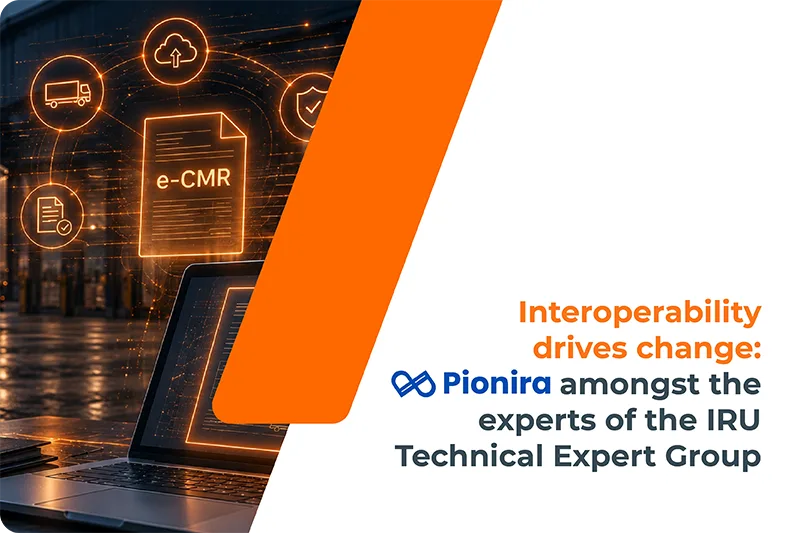
The digitalisation of freight transport has taken another important step forward thanks to an initiative promoted by IRU– International Road Transport Union. The international organisation has announced the creation of a Technical Expert Group dedicated to developing an interoperable framework for e-CMR, the electronic consignment note established under the Protocol to the UnitedNations CMR Convention.
The goal is to enable seamless data exchange between different e-CMR platforms, supporting more efficient, secure and transparent management of transport documents across the entire supply chain. This represents a key milestone in building a truly digital transport ecosystem and preparing the industry for upcoming European regulations such as eFTI.
The new working group brings together leading e-CMR solution providers and international organisations, including Pionira, FIATA, IN Groupe and other technology partners. The shared objective is to define an open standard that enables different e-CMR platforms to communicate without technological barriers. e-CMR interoperability will allow logistics stakeholders to exchange documents and information securely, efficiently and in compliance with international standards.
For the logistics sector, this marks a significant step forward. Digital transformation is not only about replacing paper documents with digital ones, but also about enabling information systems to work together seamlessly.
e-CMR is the digital version of the traditionalCMR consignment note used in international road freight transport. The electronic consignment note allows companies to:
More and more companies are investing in digital transport documents, recognising e-CMR as a strategic tool to improve efficiency, sustainability and service quality.
Digitising documents alone is not enough. If every e-CMR platform operates as a closed system, paper archives risk simply being replaced by digital silos. Interoperability enables carriers, freight forwarders, shippers, consignees and public authorities to exchange information regardless of the software they use.
Its main benefits include:
In other words, interoperability transforms e-CMR from a digital document into a true enabler of digital logistics.
IRU’s initiative becomes even more relevant in light of the European eFTI (electronic Freight Transport Information) Regulation. The regulation aims to facilitate the digital exchange of freight transport information between businesses and public authorities through structured data and electronic transport documents.
In this context, interoperable e-CMR platforms will playa key role in ensuring regulatory compliance and simplifying administrative processes.
Pionira’s participation in the Technical Expert Group highlights the importance of collaboration between technology providers, industry associations and logistics operators. Developing shared standards is essential to accelerating e-CMR adoption and enabling seamless information exchange throughout the transport ecosystem.
IRU’s initiative sends a strong signal to the logistics industry. e-CMR interoperability is one of the foundations of digital freight transport, enabling documents and data to move securely and efficiently across the supply chain.
At Leviahub, we believe the future of logistics depends on open standards, collaboration and interoperable digital platforms capable of creating value for every stakeholder.
beOne Geocoding turns addresses into accurate geographic data for logistics, helping companies optimize routes, deliveries, operational planning, and geographic analysis with Google Maps Platform.
Leviahub offices will be closed from August 5 to August 26. Urgent support requests will remain available through the Web Ticket system during the summer break.
Route planning has become a strategic driver for improving logistics performance, reducing transport costs, increasing delivery efficiency and supporting a more sustainable supply chain.
At SIL Barcelona 2026, Leviahub presents its growing international ecosystem and innovative technologies designed to accelerate digital transformation across logistics, transport and supply chain operations.
Leviahub successfully concluded its participation in SIL Barcelona 2026, presenting innovative solutions for supply chain digitalisation, e-CMR, TMS, data interoperability and Artificial Intelligence in logistics and transport.
Leviahub Spa
Headquarters: Foro Buonaparte, 71 - 20121 Milano (MI)
Tel. +39 02 611133 | info@leviahub.com
Share capital Euro 5.057.400,00i.v.
P.I. e C.F. 01233220324 | REA MI-2503338
SDI: 1YY4LRX

.svg)
.svg)

.svg)


