16/4/2026
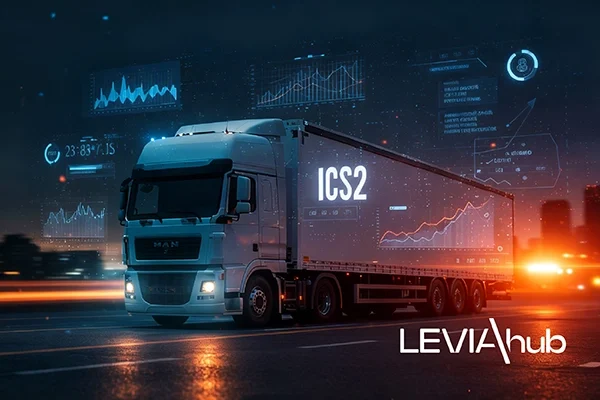
With the full extension of the ICS2 (Import Control System 2) system to road and rail transport as well, European customs security is entering a new operational phase. This is no longer a gradual adjustment, but a structural framework for all companies involved in international trade flows into the European Union.
ICS2 introduces a preventive risk analysis system based on advance data regarding incoming goods. This means that the quality and completeness of the information transmitted before arrival at the border become critical.
The central element of the new system is clear: controls are shifting upstream. Customs authorities evaluate the data before the goods reach EU territory. If information is missing or inconsistent, requests for additional information and supplementary checks may be triggered.
For businesses, the consequences are immediate:
ICS2 therefore does not merely introduce a new technical requirement but changes the way the supply chain must manage the flow of information.
With the system now fully operational for road and rail as well, customs compliance can no longer be treated as a separate administrative step but becomes an integral part of the logistics process.
The accuracy of data—such as the description of goods, codes, and parties involved in the shipment—directly impacts the entire operational flow. Errors or approximations that could previously be addressed at a later stage now risk causing delays even before the shipment reaches the border. For this reason, many companies are reviewing their internal procedures, with greater attention to data quality from the moment the order is placed.
The full implementation of the ICS2 system reinforces a now-obvious principle: in international logistics, data is now an integral part of transport. Without systems capable of ensuring the updating and traceability of information, regulatory compliance becomes more complex to manage. Integrating customs information flows into corporate systems reduces the risk of errors and maintains operational continuity. It is not just a matter of regulatory compliance, but of the overall reliability of the supply chain.
With ICS2, European customs security thus takes on a more structured and preventive dimension. For companies operating on an international scale, adapting to these changes becomes a necessary condition for ensuring the smooth flow of their logistics operations.
beOne Geocoding turns addresses into accurate geographic data for logistics, helping companies optimize routes, deliveries, operational planning, and geographic analysis with Google Maps Platform.
Leviahub offices will be closed from August 5 to August 26. Urgent support requests will remain available through the Web Ticket system during the summer break.
IRU launches a new interoperable framework for e-CMR, paving the way for more efficient, secure and connected digital freight transport across Europe.
Route planning has become a strategic driver for improving logistics performance, reducing transport costs, increasing delivery efficiency and supporting a more sustainable supply chain.
At SIL Barcelona 2026, Leviahub presents its growing international ecosystem and innovative technologies designed to accelerate digital transformation across logistics, transport and supply chain operations.
Leviahub Spa
Headquarters: Foro Buonaparte, 71 - 20121 Milano (MI)
Tel. +39 02 611133 | info@leviahub.com
Share capital Euro 5.057.400,00i.v.
P.I. e C.F. 01233220324 | REA MI-2503338
SDI: 1YY4LRX

.svg)
.svg)

.svg)


